About True Sense Digital Multimeter, DT830D
To avoid possible damage to the meter or to the equipment under test, follow these guidelines:
- Disconnect circuit power and discharge all high-voltage capacitors before testing resistance, continuity, diodes, or capacitance.
- Use the proper terminals, function, and range for your measurements.
- Before measuring current, check the meter's fuses and turn power off to the circuit before connecting the meter to the circuit.
- Before rotating the range switch to change functions, disconnect test leads from the circuit under test.
- Before attempting to insert transistors for testing, always be sure that the test leads have been disconnected from any measurement circuits.
- Remove test leads from the meter before opening the Meter case.
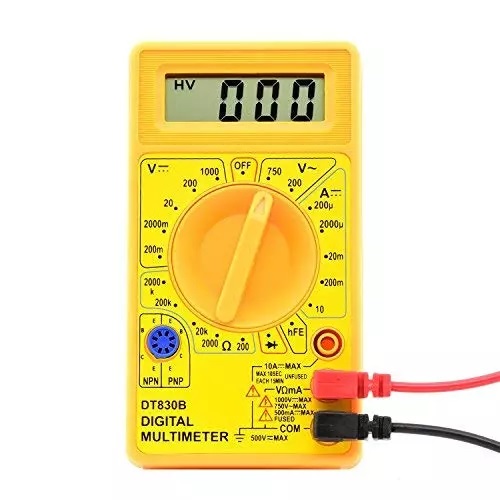
Comprehensive Measurement RangeThe DT830D accommodates a wide array of electrical measurements, including DCV, ACV, DCA, and resistance. It can accurately test up to 600V for voltage and 10A for current, ensuring suitability for many household and light commercial applications. Its resolution down to 0.1mV allows for precise readings, bolstered by built-in overload protection.
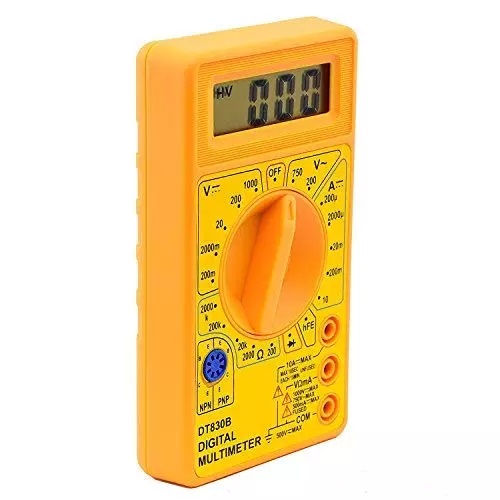
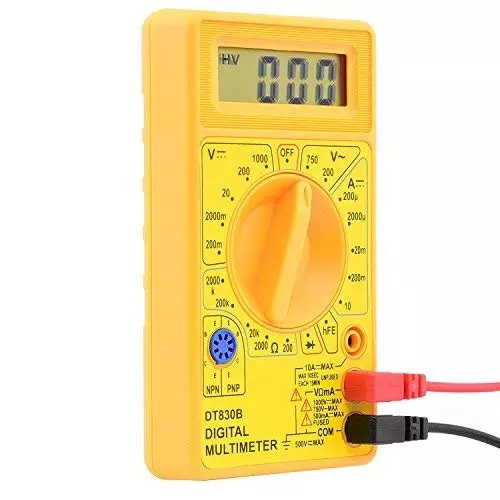
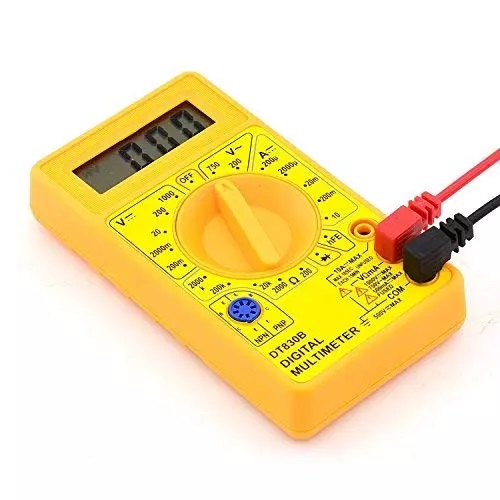
User-Friendly FeaturesWith its clear 312-digit LCD display, manual rotary range switch, and tactile design, the DT830D is easy to operate for both beginners and professionals. Standard test leads, diode and transistor hFE testing, and a convenient continuity buzzer enhance usability. The meter's compact size and lightweight build improve portability.
Safety and EfficiencyThe meter is rated CAT I 600V for safety, features overload protection, and alerts for low battery. Its power consumption is notably low (<0.3W), and it needs only a single 9V battery for operation, supplied in the package. Designed for use in non-condensing humidity below 80%, it ensures dependable performance.
FAQ's of True Sense Digital Multimeter, DT830D:
Q: How do I use the DT830D Digital Multimeter for measuring voltage or current?
A: To measure voltage or current, connect the supplied standard test leads to the appropriate terminals, select the desired measurement type (DCV, ACV, or DCA) using the rotary switch, and place the probes on the test points. Always start from the highest range and adjust downward for enhanced accuracy and safety.
Q: What is the benefit of the manual range selection on this multimeter?
A: Manual range selection allows you to choose the specific measurement range for voltage, current, or resistance, providing greater control and accuracy for various tasks. It also helps prevent overloads and ensures safe operation during measurements.
Q: When should I replace the battery in my DT830D multimeter?
A: You should replace the battery when the low battery indication appears on the LCD display. The unit operates on a standard 9V (6F22) battery, which is supplied. Regular battery replacement ensures accuracy and prolongs device lifespan.
Q: Where is the DT830D primarily used and who can benefit from it?
A: The DT830D is suitable for home, workshop, or light industrial environments for basic electrical testing. Hobbyists, electricians, and students can benefit from its accurate readings, compact design, and comprehensive range of measurement functions.
Q: What safety features does the DT830D offer during electrical testing?
A: This multimeter is built to CAT I 600V safety standards and features overload protection on all ranges. The plastic enclosure and low power consumption further enhance operational safety, minimizing risks for users.
Q: How do I process a diode test or transistor hFE test with this multimeter?
A: For diode testing, set the rotary switch to the diode function and use the probes to check the component. For transistor hFE, insert the transistor leads into the dedicated socket. The meter then displays the test result on the LCD.
Q: What is the accuracy rating for DC voltage measurements on this device?
A: The DT830D offers a DC voltage measurement accuracy of 0.5%, ensuring reliable results in your testing applications.






 Send Inquiry


 Send Inquiry