About Mitutoyo 103-137 Outside Micrometer 0-25mm, MM-01
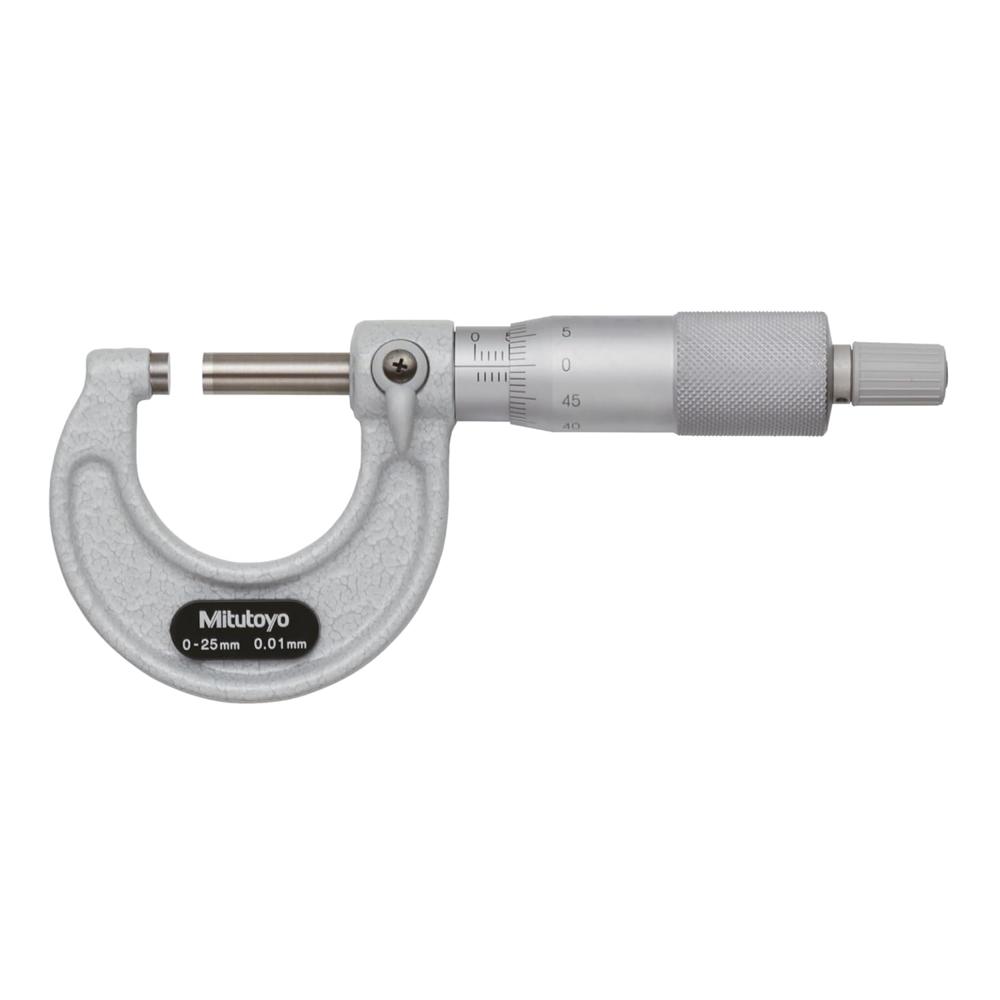
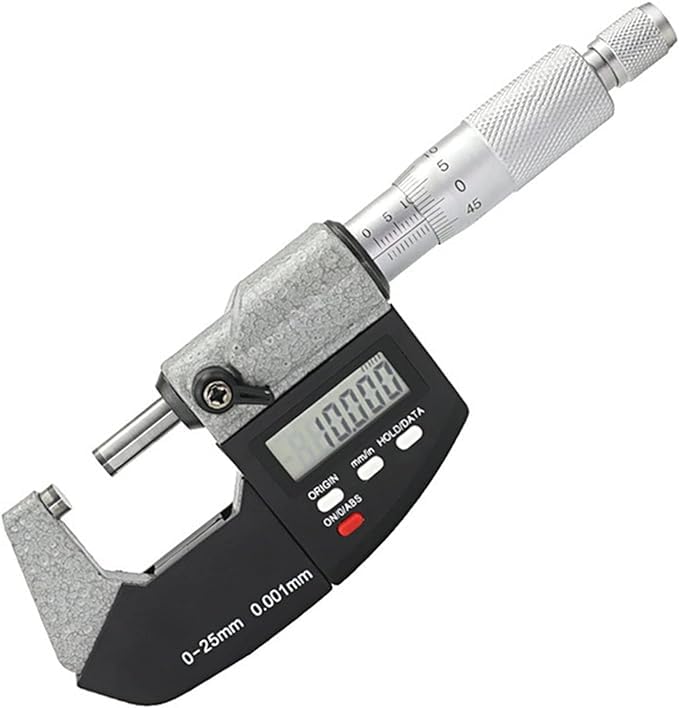
A micrometer which is also known as a screw gauge is a device used to make precise measurements. It comprises of a spindle that is a very accurately machined screw and the object that is to be measured is placed between the spindle and the anvil. Thereafter, the knob on the other end is moved until the object to be measured is lightly touched by both the ends of spindle and the anvil. Such micrometers are majorly used in mechanical engineering. They are also used in telescopes so as to measure the diameter of the celestial bodies.
Features:
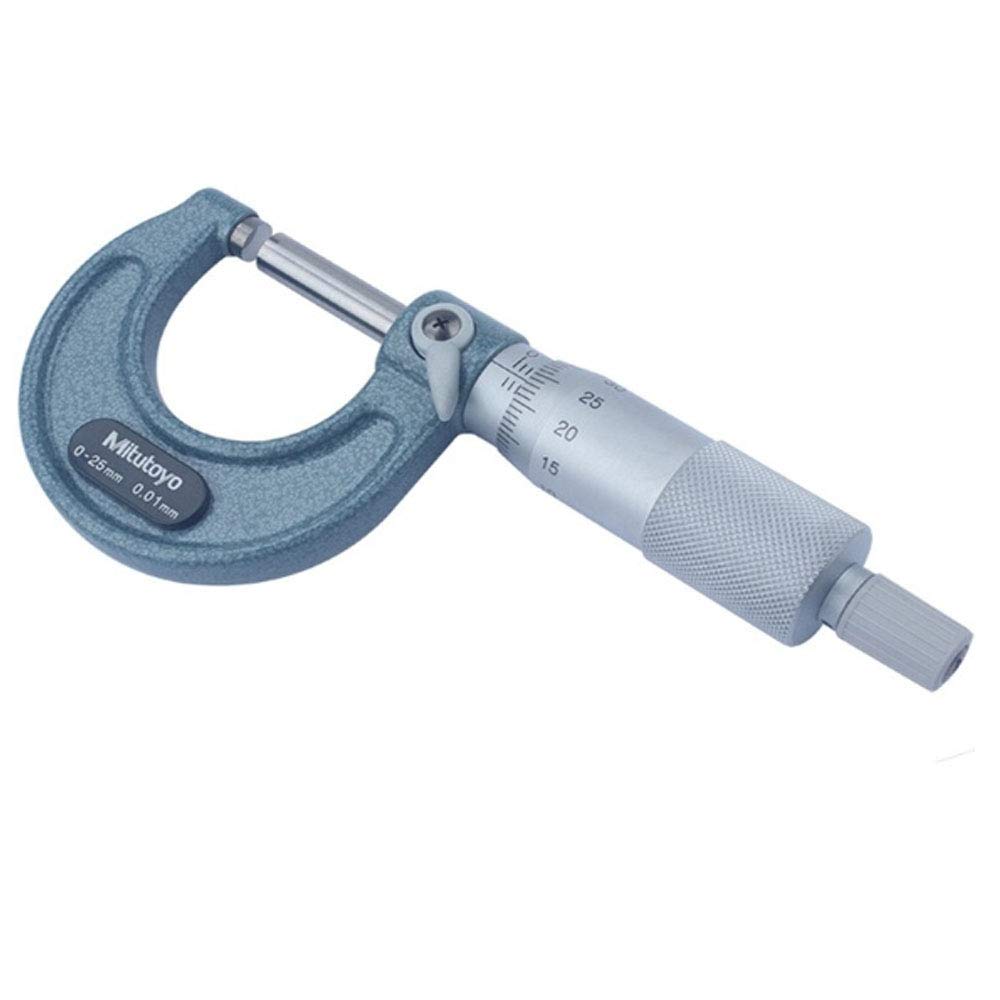
- Hammertone-green, baked-enamelfinished frame.
- Ratchet Stop for exact repetitive readings.
- With a standard bar except for 0-25mm model.
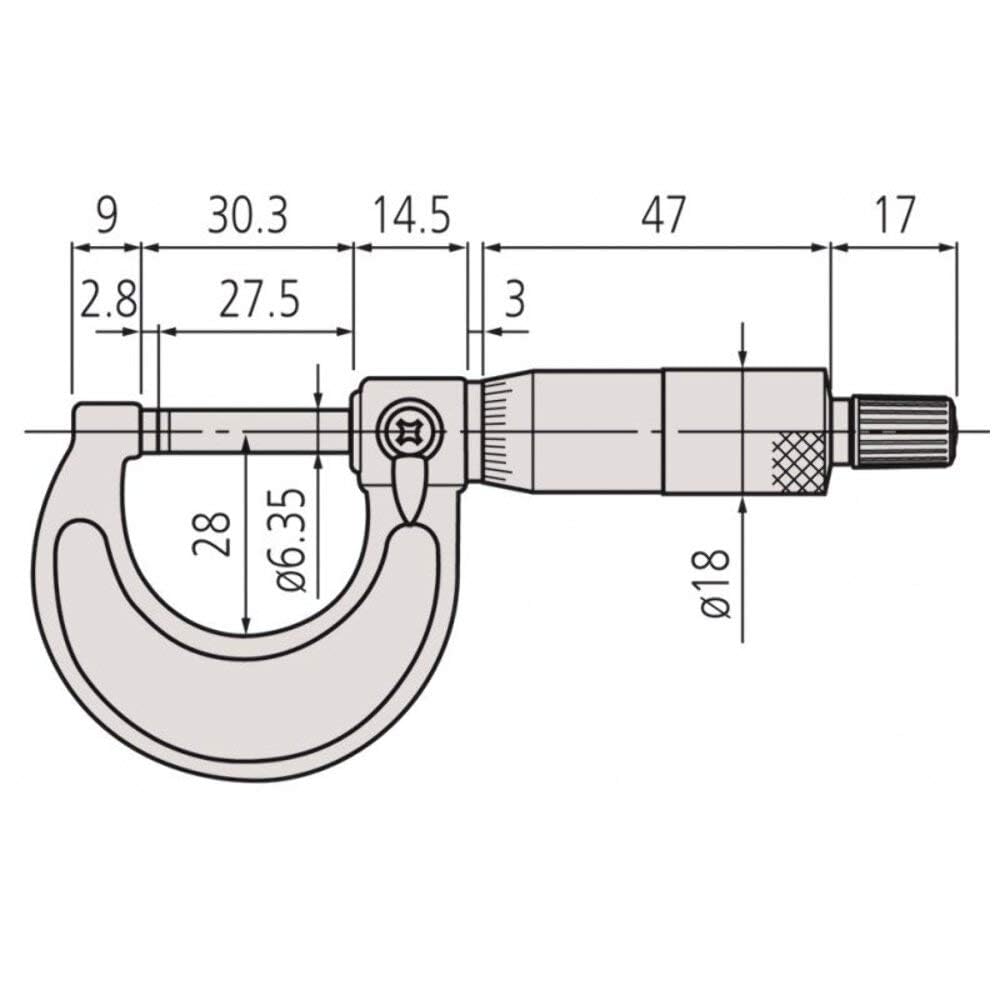
- Graduation: 0.01mm, 0.001mm
- Parallelism: (2+R/100)m, R=max. range (mm)
- Measuring faces: Carbide tipped
Specifications:
|
Type
|
Range
|
Accuracy
|
Mass
|
|
103-137
|
0-25mm
|
2m
|
175g
|
Exceptional Measurement AccuracyWith a 0-25mm range and 0.01mm thimble graduation, this micrometer provides highly precise readings for external measurements. Whether gauging the thickness of components or verifying diameters, its accuracy within 2 microns ensures dependable results for quality control and inspection.
Rugged Build for LongevityThe Mitutoyo 103-137 features an enamel-coated steel frame and carbide-tipped contact surfaces. This robust construction resists wear and corrosion, delivering continued performance even under frequent industrial or workshop use. The lever-type spindle lock adds stability to your measurements.
User-Friendly Analog ReadingEquipped with a clear analog scale on both the thimble and sleeve, users can easily obtain measurements down to 0.01mm. The ratchet stop mechanism ensures each measurement is applied with consistent pressure, minimizing user error and guaranteeing repeatable outcomes.
FAQ's of Mitutoyo 103-137 Outside Micrometer 0-25mm, MM-01:
Q: How do I use the Mitutoyo 103-137 Outside Micrometer for measuring external diameters?
A: To measure an object, open the micrometer's anvil and spindle wide enough to fit the part. Place the item between them, then rotate the ratchet stop until the spindle gently contacts the surface. Lock the spindle using the lever if needed. Read the measurement on the thimble and sleeve graduated in 0.01mm increments.
Q: What benefits does the ratchet stop mechanism provide?
A: The ratchet stop ensures the same measuring force is applied each time, reducing user variation and improving measurement consistency. This is essential for obtaining accurate and repeatable measurements, especially in high-precision applications.
Q: Where can this micrometer be used and what applications is it suited for?
A: The Mitutoyo 103-137 is intended for general-purpose measurements of external diameters and thicknesses, making it suitable for workshops, factories, quality control labs, and educational settings across India. It is ideal for both professionals and technicians.
Q: When should the lever-type spindle lock be used during measurements?
A: Engage the spindle lock when you need to secure the spindle in place after making contact with the measured surface. This helps maintain the measurement, allows for easy reading, and prevents unintentional movement while recording data.
Q: What materials are used in the construction of the device, and why are they advantageous?
A: The micrometer's frame is made of sturdy steel with an enamel coating for protection against rust, and the spindle and anvil tips are carbide-tipped for exceptional wear resistance. These materials extend the instrument's service life under regular usage.
Q: How accurate and precise is the Mitutoyo 103-137 micrometer?
A: This model meets the JIS B 7502 standard for accuracy, guaranteeing deviations do not exceed 2 microns. It offers a resolution of 0.01mm, allowing extremely fine measurements suitable for demanding quality checks.
Q: What is the process for reading measurements on this analog micrometer?
A: After securing the object and locking the spindle, read the value on the sleeve for the main measurement and the thimble for the additional fraction. Together, these graduations provide the total measurement in 0.01mm increments.






 Send Inquiry


 Send Inquiry